Email is a 50-year-old technology, and for most of that history, it has been powered by a protocol called IMAP (Internet Message Access Protocol). Developed in the 1980s, IMAP was designed for a world of terminal-based access and intermittent connections. It was never meant for the mobile-first, multi-device, always-on world of 2026.
When we built PAAVS, we made a radical choice: we abandoned IMAP in favor of JMAP (JSON Meta Application Protocol).
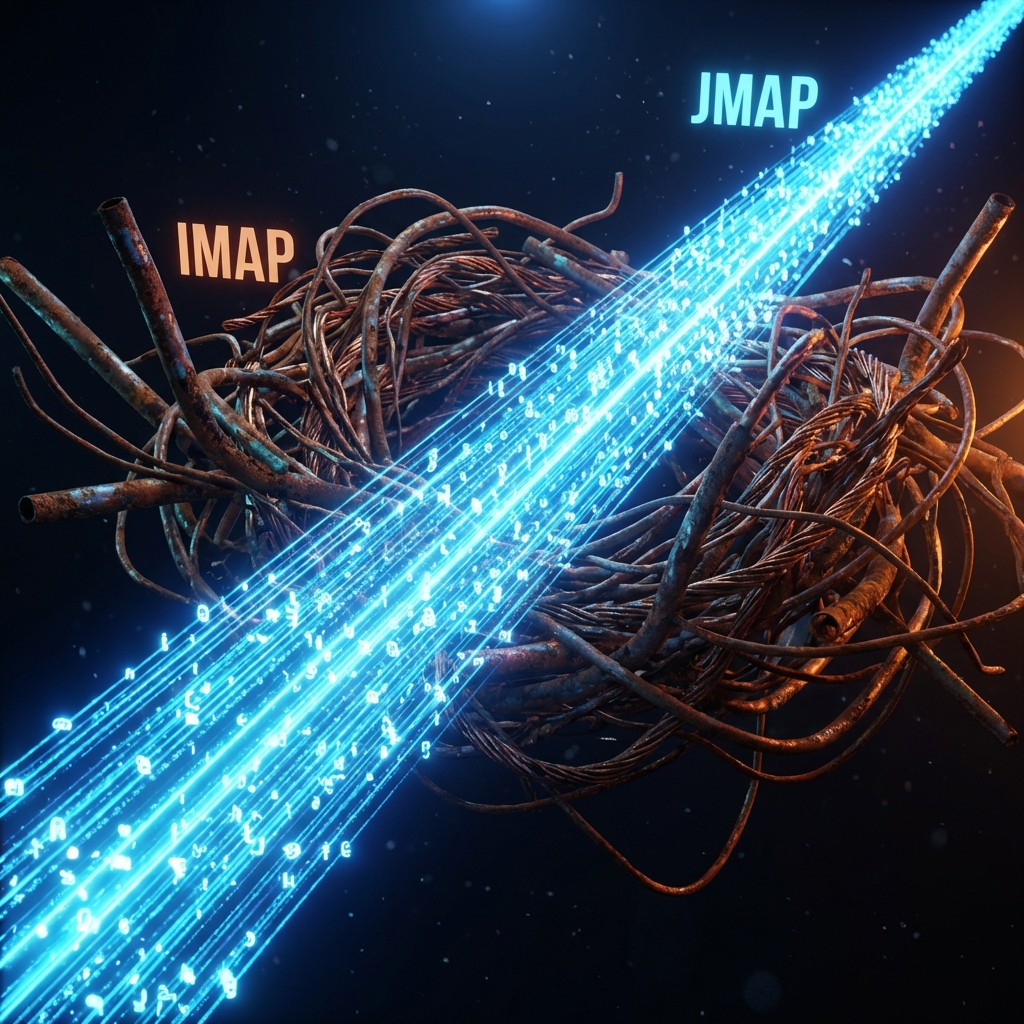
What is JMAP?
The IMAP Problem: Chunks and Chatter
IMAP is a "chatty" protocol. To show you your inbox, a client has to send multiple commands and wait for multiple responses. On a high-latency mobile network, this "chatter" results in a sluggish user experience—the classic "Checking for mail..." spinner.
Furthermore, IMAP is difficult to parse. It uses a bespoke syntax that requires complex libraries, increasing the "attack surface" of your email client. Every line of legacy code is a potential security vulnerability.
The JMAP Solution: Batching and Efficiency
JMAP flips the script. Instead of dozens of round-trips to the server, JMAP allows the client to batch requests. A single HTTP call can fetch the message list, update read statuses, and synchronize folders simultaneously.
1. Battery Life & Push
IMAP requires a persistent "Idle" connection to receive push notifications, which slowly drains mobile battery. JMAP integrates natively with modern push services (like WebSockets or mobile OS push), allowing the app to sleep until there's actually a message waiting.
2. State Synchronization
JMAP uses high-level "state" tokens. Instead of the client asking "What happened in Folder X?", it sends its last known state token and receives only the incremental changes. This makes synchronization near-instant, even following a long period of offline work.
Performance Gain
A Unified Future
JMAP isn't just for email. It's built to handle contacts (CardDAV successor) and calendars (CalDAV successor) through a single, unified API. By adopting JMAP, PAAVS is ensuring that your digital life remains fluid, fast, and future-proof.
Experience the speed of the future.
Try PAAVSMail